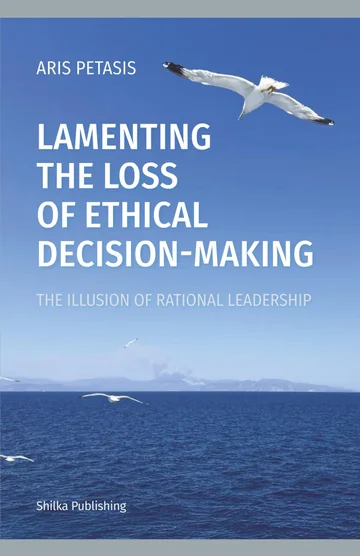
Lamenting the Loss of Ethical Decision-Making
The Illusion of Rational Leadership
A virtuously rational leader is someone who makes decisions based on reason and logic that also reflect high moral standards and ethical conduct. The author argues that, given the inherent limitations of the human mind, fully rational decisions are an illusion. At best, most decisions are just ‘good enough’: they do no more than meet the standards set in advance to suit the interests of the decision-maker and his or her organisation, country or other grouping.
Read more
A leader can make a ‘good’ decision ‘under the circumstances’ that meets basic criteria – criteria usually set by that leader and often contaminated by greed and power hunger. Political decisions, in particular, are often made to appear rational, and even ethical, but are in fact redolent with propaganda and falsehoods. Typically, such decisions fail because of weak rationality and poor ethics. The author asks: “What is rational or ethical about a decision to attack another country, steal its assets and control its government?”
The book uses the paradigm of the Vietnam War to demonstrate the inability of even the smartest people to make rational decisions, particularly when their deliberations are devoid of virtue. The ‘best and the brightest’ in American politics and strategy advised several US presidents to continue to prosecute the Vietnam War, which lasted for 20 years and was fought thousands of kilometres away from America, a safe homeland protected by two oceans. Their advice rested on biased and ‘imaginative’ scientific analyses, meaningless numbers and designer statistics using made-to-measure scientific models. Ultimately, America was humiliated and about 3 million people lay dead.
At the outset, the decision-makers had failed to ask the question: “Is it right and legitimate for us to use chemical weapons, napalm bombs and 350,000 American troops to kill millions of people in order to force Vietnam to adopt a political system that is to our liking?” Had this moral question been integral to the decisions made by America’s leaders, this calamitous and irrational war would have been prevented and humanity would have been spared a great agony.
Aris Petasis examines rationality and virtuosity in decision-making, concluding that both attributes must be considered if a decision is to be credible. He argues that passions, particularly greed and perverted ambition, tempt leaders into making wrong decisions. His rich professional background and scholarly approach enable him to offer thought-provoking observations on decision-making and a set of guidelines to help leaders make more rational and ethical decisions, be they CEOs, rulers, generals or international strategy pacesetters.